
Liver is the largest and most important organ in the body. It helps to process food, remove toxins from the blood, and create new blood cells. The organ helps to control blood glucose levels and protect against liver cancer. It helps to process food, remove toxins from the body, and produce blood. If liver function is impaired, it can lead to many health problems. Our bodies, although, naturally cleanse all of our organs on their own, but if we make changes to our diet and daily routine, it will be much simpler to detox the liver in particular and do so more effectively.
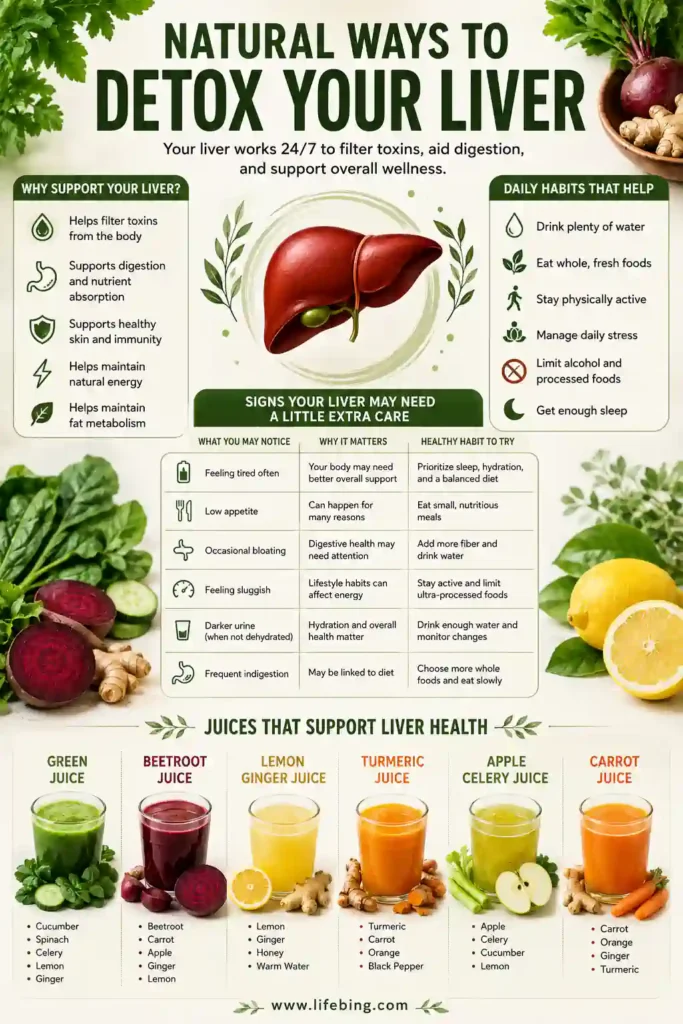
Signs Your Liver May Need a Little Extra Care
Your liver works around the clock to filter waste, process nutrients, and support your overall health. While it often does its job quietly, certain everyday changes can be a reminder to pay closer attention to your lifestyle. These signs don’t necessarily mean you have liver disease, but they can be a good reason to focus on healthy habits and, if symptoms persist, speak with your healthcare provider.
| What You May Notice | Why It Matters | Healthy Habit to Try |
|---|---|---|
| Feeling tired often | Your body may need better overall support | Prioritize sleep, hydration, and a balanced diet |
| Low appetite | Can happen for many reasons | Eat small, nutritious meals |
| Occasional bloating | Digestive health may need attention | Add more fiber and drink water |
| Feeling sluggish | Lifestyle habits can affect energy | Stay active and limit ultra-processed foods |
| Darker urine (when not dehydrated) | Hydration and overall health matter | Drink enough water and monitor changes |
| Frequent indigestion | May be linked to diet | Choose more whole foods and eat slowly |
What is liver detox?
When your liver becomes weakened, certain symptoms manifest in your body. These include symptoms such as weakness, loss of appetite, vomiting, insomnia, feeling tired all day, lethargy in the body, rapid weight loss, and liver inflammation. This is the right time to think detoxifying your liver.
👉 Explore Mediterranean meals that support fatty liver health
Simple, flavorful dishes you can start today.
Detoxification is the process of removing toxins from the body. The liver is responsible for detoxifying many chemicals and substances that are ingested, inhaled, or absorbed through the skin. Liver detox can be done through a number of methods, including drinking plenty of water and herbal tea, eating light meals, and taking supplements such as ginger or turmeric.
Benefits of liver detox
Detoxing your liver can provide a variety of benefits, both short-term and long-term. Short-term benefits include reduced inflammation, better digestion and improved energy levels. Long-term benefits include better health overall and reduced risk of developing various diseases.
How to do liver detox?
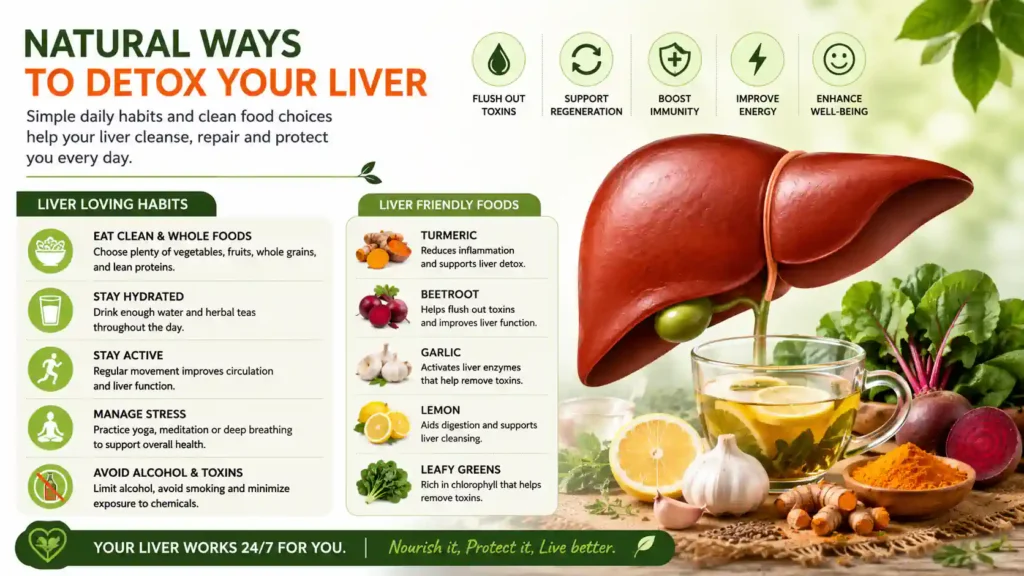
There are several ways to do a liver detox, but the most popular is the ascetic fast. This involves fasting for 10-14 days, drinking only purified water, including yoga in your routine and avoiding all processed foods.
Other methods include eating lots of fruits and vegetables, taking supplements such as milk thistle or bilberry extract, performing yoga or meditation, and using herbs like dandelion or burdock. The basic steps to liver detox include
- Taking liver-cleansing supplements
- Consuming liver-friendly foods
- Avoiding specific food types.
- Fasting only on juice.
- Using Enemas to cleanse the colon and intestines.
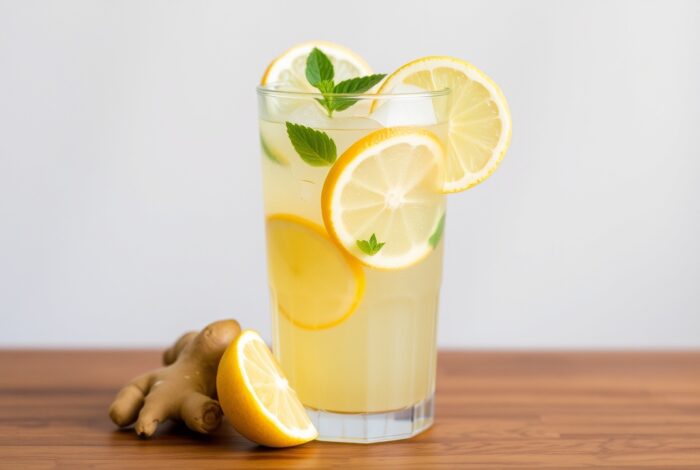
Liver-Supporting Juice Ideas to Try
Fresh fruit and vegetable juices can be an easy way to add more vitamins, minerals, and antioxidants to your diet. While no juice can detox or cleanse your liver on its own, nutrient-rich ingredients may support overall liver health as part of a balanced lifestyle. Here are seven simple juice combinations you can enjoy at home.
Tips for doing liver detox
When it comes to doing a liver detox, there are a few tips you should keep in mind. First and foremost, make sure to stay hydrated. This is especially important if you’re doing a detox diet because it can help flush out your system faster. Additionally, eat foods that are high in fiber to help remove waste from your body.
And finally, try to get plenty of rest and exercise during the detox process – both of which can help improve your overall health.
Small Meals : A small, frequent meal is a good way to help the liver cleanse itself. These meals should be light and include plenty of water, vegetables, and fruits. One of the best ways to help your liver is to eat a diet high in vegetables, fruits, and whole grains. When you eat a diet that is high in fiber, it’s easier for your body to expel toxins from your system.
Small meals in liver detox are important for several reasons. First, they provide a steady stream of nutrients to the liver, which is an organ that helps process and eliminate toxins from the body. Second, small meals help us to stay busy and motivated during liver detox, as they keep our minds occupied. Third, small meals help us to avoid eating large quantities of food at once, which can lead to overeating and weight gain. Finally, small meals allow us to enjoy a variety of foods while keeping our palate clean and healthy.
Fatty Acid rich Diet : Fatty acids are naturally occurring molecules that can be found in both animal and vegetable sources. These compounds are important for a healthy liver because they help the organ remove toxins from the body. In addition, fatty acids can play a role in regulating cholesterol levels.
Vitamin D intake
For people with NAFLD and non-alcoholic steatohepatitis, vitamin D has been suggested as a potential therapeutic option to treat liver damage. Vitamin D is known to play a role in preventing fatty liver disease and may be important in treatment as well. In fact, research suggests that people who have low levels of vitamin D are two times more likely to develop fatty liver disease than people who have normal levels of vitamin D. One study found that people who took supplements containing vitamin D had a 82 percent reduction in the risk of developing fatty liver disease over a four-year period.
Stop Alcohol consumption
Alcohol is one of the leading causes of liver cirrhosis and liver cancer.
So, you should stop drinking to heal your liver? Yes. The vast majority of people who stop drinking experience immediate and long-term benefits to their health, including better sleep, fewer cravings, and less weight gain. Stopping alcohol can also help shrink or even eliminate liver tumors. There are a few caveats: If you have severe hepatitis C or if you are pregnant or breastfeeding, speak with your doctor first before quitting alcohol. And don’t start drinking again if you experience any uncomfortable side effects from quitting—these may include headaches, anxiety, mood swings, nausea, or vomiting.
Fibre Rich food
Smooth liver function can be achieved by increasing the intake of fiber-rich foods. It is also necessary to maintain a balanced diet in order to keep the liver healthy. The body requires regular consumption of nutritious foods like whole grains, fresh produce, lean proteins, dairy products, etc. Fiber-rich foods are essential for maintaining digestive health and overall health.
👉 Explore Mediterranean meals that support fatty liver health
Simple, flavorful dishes you can start today.
Avoid self medication
The liver may experience side effects from taking too much medications, so caution should be taken to protect the organ’s health. Hence, without consulting a doctor, one should not take medications. The liver can suffer damage from self-medication with over-the-counter drugs. Pain relievers, in particular, are thought to be harmful to the liver and kidneys.
